





Freediving today is in a stage of maturity as a sport, after at least 26 years, since the establishment of the first training organizations, their instructors and freediving diving centers, from which all services are provided to freediving hobbyists.
For the aspiring freediver, all this infrastructure and the people who operate it have unique value. Today, if someone thinks about entering the hobby or evolving to the next level of knowledge, it is certain that they will choose to do so through professional training and education and not as a self-taught person or by learning things from a more experienced friend.
We have definitively overcome this “childish” stage of the sport, as training has proven its enormous value in freediving (as it had done in the past with scuba diving, where training was even made mandatory for safety reasons) and has gradually become available to the public, with all the infrastructure and the people dedicated to the development of this sport as professionals.
So, what should a prospective freediver choose today, where will he have to start and what exactly are the options?
1. Organizational Issue: Choosing the content of the education, the essence of the knowledge we want.
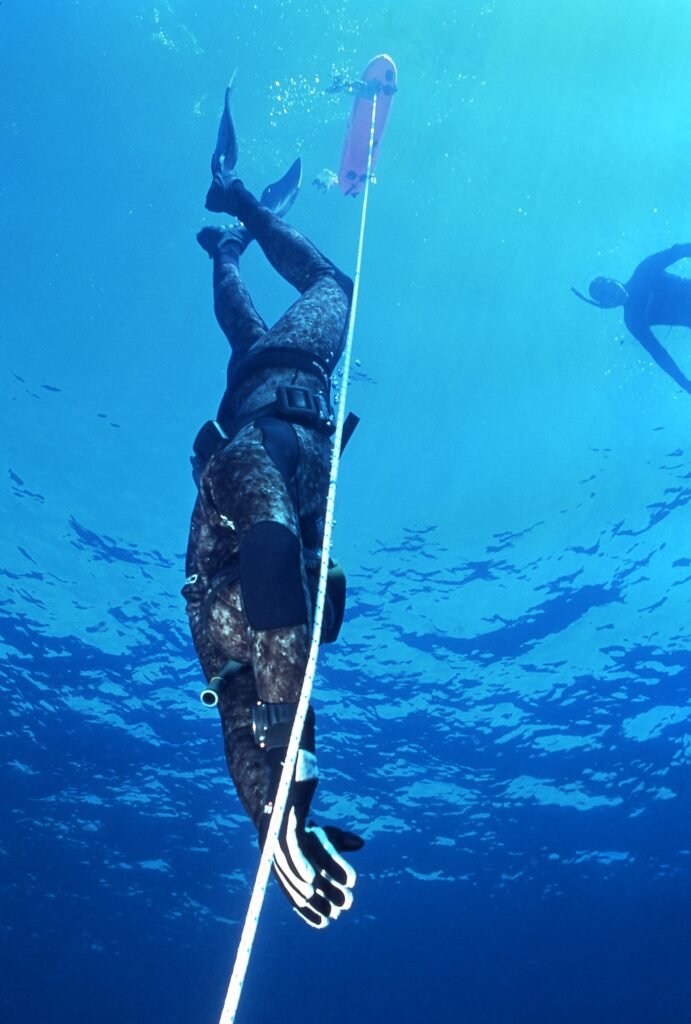
The first choice is to find out which Organization we think has the most to offer us and fits our own perception of freediving. Today, in Europe for example, we have almost 30 recognized Organizations by the EU and this is certainly the condition for our first choice. You will hear names like PADI, AIDA, CMAS, SSI, Apnea Academy and many others.
My first rating in the selection would be to ask to see the manual of the level I will be doing. If they have not bothered to make a very good manual (printed or e-book) for the new diver at that level (after 30 years of operation), I would reject them. Because this also means that they will not have good manuals for their instructors and that would be even worse, it will mean that the person who will try to train you, does not have good instructions, on what to do in the water, with his students.
2. Choosing the Freediving Diving Center: the school that provides all the support and infrastructure for our training.
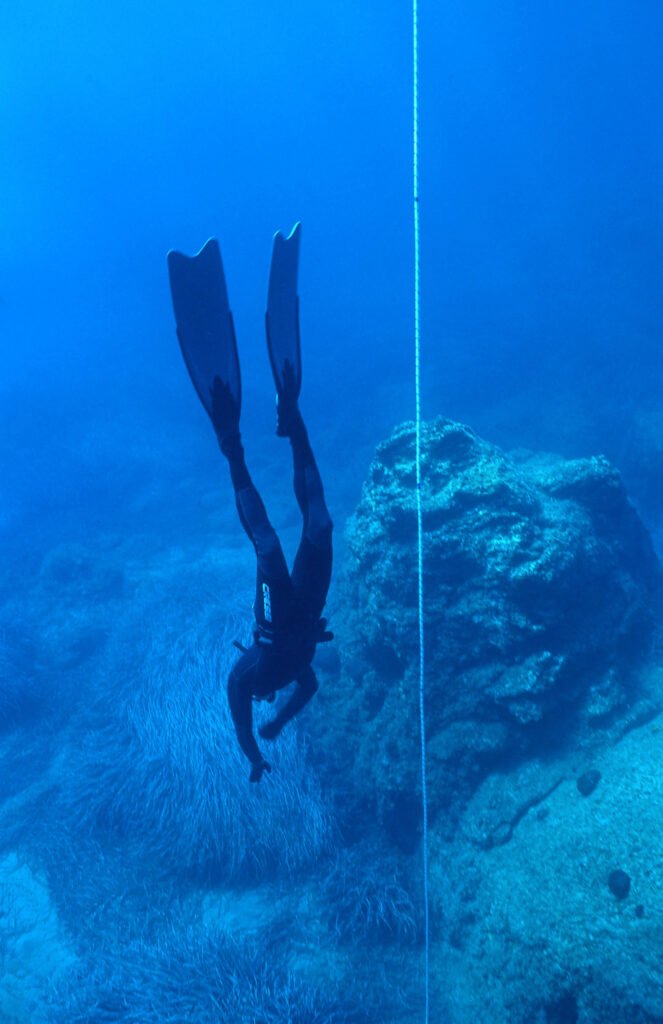
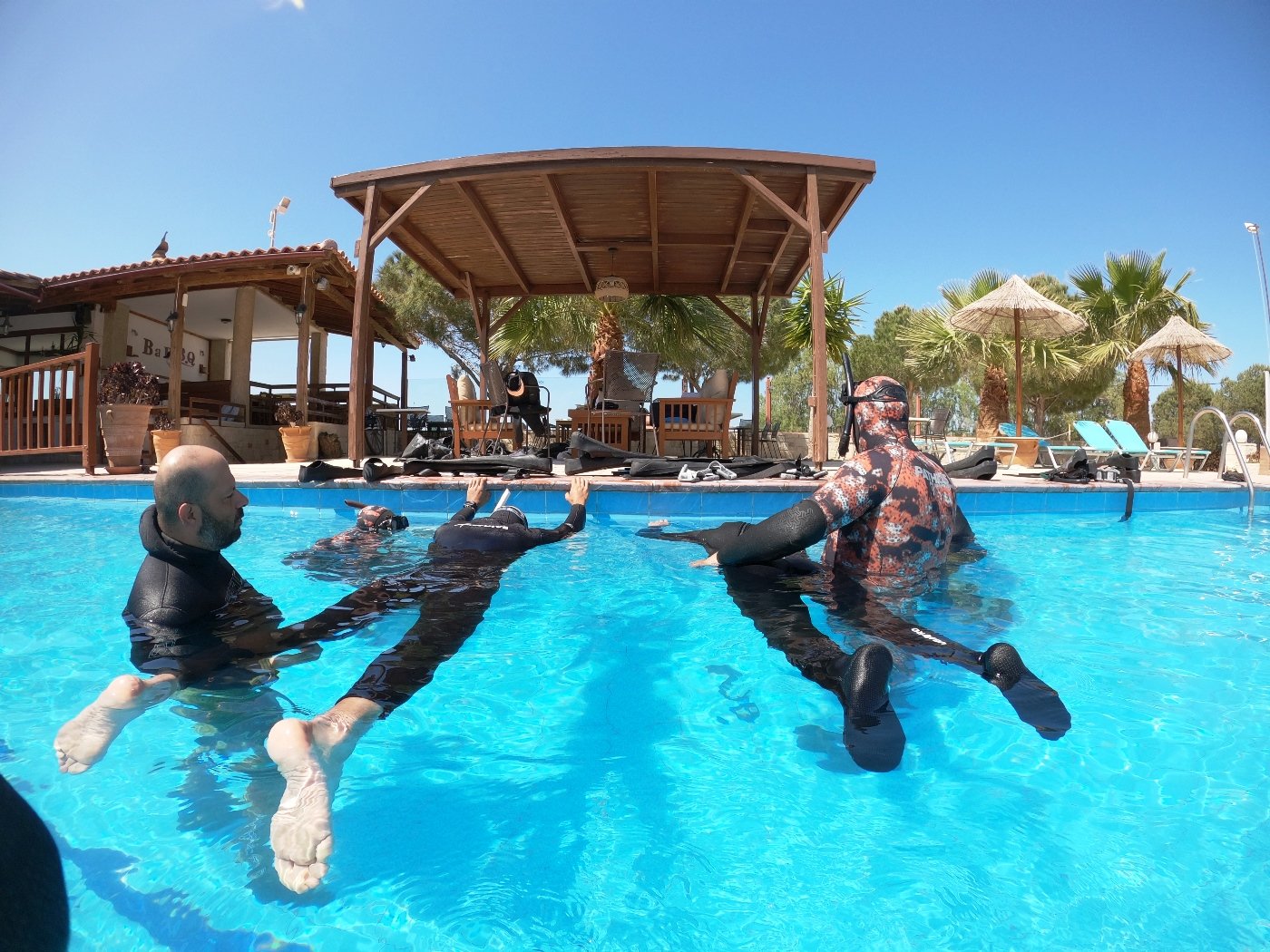
To discover a suitable freediving center, ask to be guided through the school’s facilities, see the room for theoretical lessons, the area of the equipment that the center uses in training and the means of transport for the sea. Freediving does not require huge capital investments, but passion and care and this is evident in the choices of a center dedicated to the development of its students.
Ask to see, if you don’t have your own equipment, what suits, masks and fins they will give you to use. If you are not satisfied with the school’s materials, do not hesitate to reject it. In freediving materials, a huge variety and number of equipment are needed to find the right accessory for a freediver, such as a mask. Think about how many masks you will need to try on in a store, until you find a mask that at least fits your face and won’t flood with water. If the school doesn’t have the necessary variety of equipment, we will have a huge problem in the water.
The center also provides the necessary support that the instructor needs, so it is a great advantage if we find a school determined to provide all the care, effort, and materials that will be needed during a school, freeing up the instructor’s hands, so that he can do his job easily and successfully.
3. Choosing our freediving instructor: the old Greek saying “The things you will learn are such, as the teacher you will choose” applies here.
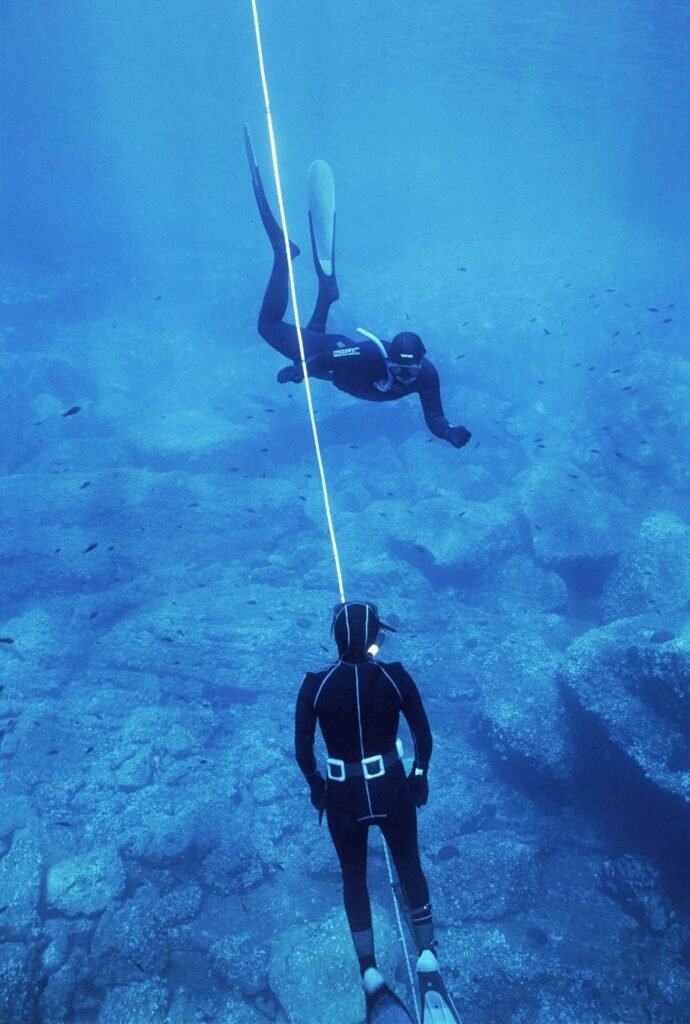
Freediving training needs people who are passionate about what they do, enthusiastic and determined to transfer the necessary knowledge and skills to their student divers. The truth is that no amount of pay is satisfactory enough for the work that freediving training requires and therefore it is not enough to attract someone professionally, if he is not himself a fanatic freediving hobbyist. So, what we want is to find someone as our instructor, who does not live from freediving, but he lives to freedive!
As far as experience is concerned, it is certain that the more experienced an instructor is (having certified a significant number of students and with many years of experience in education), the more easily he will identify and correct the mistakes and weaknesses of his students in the water. The more experienced instructor will have better organization, better use of time in the water and perhaps most importantly, he will anticipate and avoid difficult situations at sea or provide solutions in difficult moments, providing great safety to his students.
The advantage of the newest instructor is his enthusiasm and his great willingness to deal fanatically with even the smallest problem of his students and his tireless care, that all of them achieve the performance that the students need, which is why the presence of a new instructor in the water also has great value for divers.
Everything else is a matter of the instructor’s character and how diligent and determined he is to tire himself so that his students can easily achieve the goals of the training. In other words, the best Organization, the most awesome diving center and the best program, will not achieve what they promise, if the instructor does not suffer, does not get tired and does not dedicate all his energy, especially in the sea, to take care of his students’ needs.
4. The cost of freediver training: the trap of the cheap school.
When it comes to the cost of a training program, the secret is to pay attention to the benefits and not a low, attractive price, that may not provide even half of what the neighboring, slightly more expensive center, provides.
In other words, usually what is declared “cheap” is ultimately the most expensive, because not only does it provide fewer things, but it also has low quality infrastructure, materials or (worst of all) the bad mood of an underpaid staff. If we support the right professionals and the right freediving centers, giving them a fair and satisfactory compensation, we are essentially taking care of ourselves, because they will remain active in the field and we will have them there, available and ready for action, for our every need and especially in the next, even more demanding, steps of our training, as freedivers.

Continue the Conversation
Share your thoughts, ask a question or contribute your experience below.