





U/W Photographs: © Yannis Detorakis
People have the habit of leaving behind them their first great memories in freediving. As we achieve to go to new greater depths and gain nice experiences in freediving, we gradually tend to forget those first impossible dives to 2-3 meters! That restricting pain in the ears, that send to your brain the message that you have completely lost your mind, if you think this could work for you and that you will manage to learn, in some impossible way, a method to overcome the pain in your ears and be able to dive to 5 meters!
For me, this experience was a little more dramatic. As a 14-year-old child at the time, I had already reached 5-6 meters in freediving and as a self-taught freediver, I had begun to gain great self-confidence, about how far our freediving skills could go. My two friends and I, who were diving together, in Kavala, Greece, had an incident that proved to us that, ultimately, in the sea, you can never say that you have learned to dive deep enough or come to terms, with the difficulties and obstacles and remain stationary at any depth you have already reached!
Until then, we were simply losing fish like young and inexperienced fish-hunters, but we accepted this with wisdom, one might say: I remember making my first long dynamic dives at 5 meters and as I was swimming forward, holding my “ancient” speargun, huge black rocks (!) would move from beside me, by rising and leaving (!), before I could realize that they were large groupers!
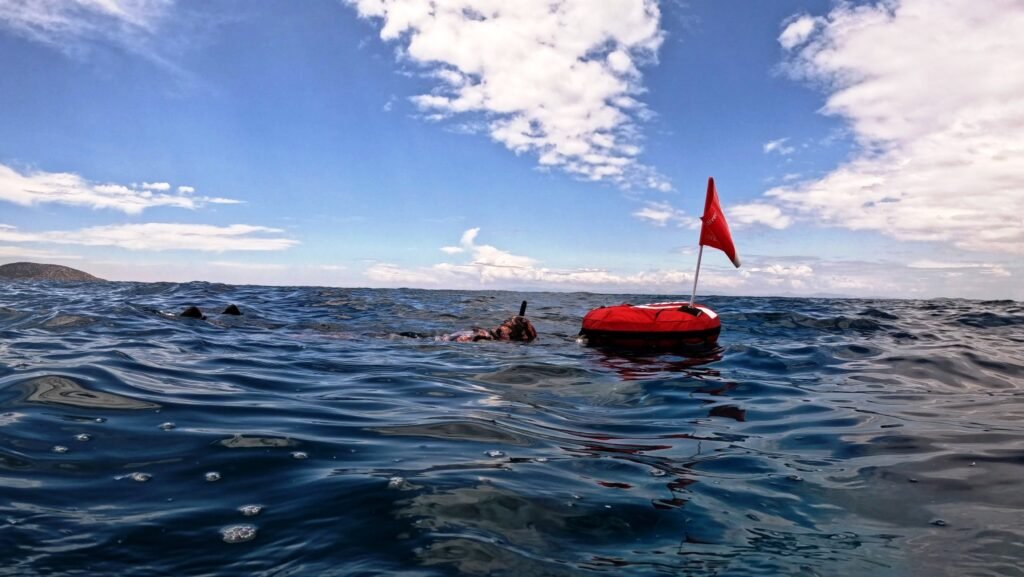
One sunny summer day, in 1981, while we were swimming at the surface, over a fantastic white sand at a depth of 11 meters, returning from freediving at a beautiful spot with large block rocks on the cape, we were blinded by a sparkling reflection from the sand, of a large band speargun, that had fallen to the seabed, a unique modern speargun at the time, the first French Beuschat, with a Tahitian rod, so new design, that we didn’t even know that such an advanced technology weapon existed.
It had probably fallen off some unfortunate spearfishing divers’ float and he had lost it! The three of us began a desperate attempt to reach the 11-meter depth, where the trophy of our lives awaited us (a weapon not only rare, but also extremely expensive for us as children, to buy it). Of course, it was impossible to dive deeper than 6 meters, where we were already in danger of bursting our eardrums, due to the inability to equalize the pressure! It was one of our most traumatic experiences in the sea: we came out after dozens of attempts, with swollen ears, crying, desperate to have lost such an incredible treasure, because we still did not have the knowledge and the skills to freedive a little deeper…
Of course, if one thinks about it, it was already a great conquest to have managed, as small children, to learn to freedive, already, comfortably, at a depth of 5-6 meters, but who could try to explain this to us on that strange day… We understood it much later, as mature freedivers!
As old freedivers we tend to forget that the new freediver has to face his first major depth barrier very early on: that of the first equalizations of pressure in the ears, which will allow him to overcome 2-3 meters of depth and reach at least 5 meters, having learned, in a clear way, how to equalize the pressure in his ears, with the appropriate method.
Up to 2-3 meters, someone could fool themselves or those who observe them, during their dive, simply by enduring the pressure and the pain in their ears, risking of course a ruptured eardrum, but it is possible, objectively, for someone to lie and pretend that they have equalized, or even think that they have equalized, if they do not know, assuming that the pain in their ears, is something normal!
After 3 meters, however, and especially when descending to 5 meters, the lies end: if someone does not know how to equalize the pressure in their ears, then either the pain will become unbearable and they will give up the effort or, worse, a ruptured eardrum will occur in one ear.
Therefore, the 5 meters depth is the first real barrier for a new freediver: if he does not learn to equalize the pressure in his ears, he will never be able to reach 5 meters and go deeper one day!
In freediver training, the older instructors know very well this first serious obstacle for all new freedivers. After all, most people who come and ask or sign up for a beginner training course, this is the first thing they will ask, because they are seriously concerned, about whether they will actually manage, with the help of the instructor and the new knowledge of the training, to easily overcome this problem, which until that moment kept them away from diving!
My personal experience after hundreds of first-level graduate divers has led me to the conclusion that the problem has been underestimated, by the first freediving training programs, designed after 2000, which is why I propose, in my relevant article, that the entire first level (of new-entry freedivers) should be dedicated to equalizations to the 5-meter depth. A pre-kindergarten, that is, a first level course, with this, as its central idea, before the course that aims to take the diver to 10 meters deep.
My own experience as an instructor, these 26 years, shows that it takes at least 30 to 40 complete dives, with equalizations every 1 to 2 meters, in order to “train” the muscles of the Eustachian tubes enough, to “unblock” them permanently, for a new diver, who is doing equalizations for the first time.
Somewhere in this number of dives, that is, after the first 30 dives, the Eustachian tubes will have trained enough to not only allow a person to equalize his ears, with ease, at 5 meters, but also to never block again, in the life time of the diver (even if he misses diving for a few years, afterwards). This is of course also influenced by learning the Valsalva equalization method, which, no one forgets afterwards, when he finds out how to do it and he succeeds for the first time.
However, we see that people who have been trained as scuba divers and who dive, that is, who know very well how to do the Valsalva maneuver and equalize, also have difficulties, when descending the first 5 meters in freediving. This is because their Eustachian tubes have not yet been trained enough, to be able to equalize with their heads down (the scuba diver usually equalizes standing up, and it is much easier to equalize in this body position) and to quickly do the 2-3 equalizations needed to go to 5 meters.
As scuba divers, they may equalize much more slowly to go to 5 meters, without the stress of holding their breath, and spending, without realizing it, a lot of time for the equalizations. So. when they try freediving, they may have difficulty, which is completely normal of course, until they have done a sufficient number of dives, that will train their Eustachian tubes!
The number of 30 to 40 dives is very large, especially for the new diver. If we also calculate the necessary warm-up that will take some time, it is doubtful whether a new diver will manage to complete 10 dives, with equalization attempts down to 5 meters in one day, before getting tired or starting to get cold in the water (with full equipment of course, that is, with a wetsuit). This practically means that it takes at least 4 days for someone to complete 40 dives. And in a group of student divers, their instructor would be very happy if everyone managed to do 10 dives (a total of 40, if there are 4 students, because they dive one by one, not all together). In other words, in training, it is considered a huge success if everyone really manages to equalize, after 4 days of open sea or pool diving, to a depth of 5 meters. That’s why I propose a special training level, dedicated only to this effort.
In practice, as instructors we already do it, because otherwise our student divers would not be able to go deeper. However, it is time for the Organizations, that design the training programs, to officially admit that it is needed and that it should be recognized as an official level. Because so far, the diving centers are also being wronged – the schools and their instructors are forced to do many additional lessons, covering sometimes many days, for which in practice they are not paid, because the Organizations consider them optional and such lessons are not considered standard training for new students. And it would be much more useful for new people in diving, to know what difficulties they will face, so that they are prepared and not disappointed in the face of any problems at their first 5 meters!
I believe that freediving, and especially freediver training, has now matured and it is time for the educational organizations to overcome their fears and stop worrying, commercially, about how to avoid scaring people, by revealing the difficulties of the sport and cause everyone to go to another sport.
I really believe that these “adolescent” concerns, of the initially immature freediving market, have been overcome and the people who are really interested and would like to get involved in the sport, demand that we speak to them honestly and inform them, so that they can trust us and decide to enter freediving.
A situation of keeping information from the public, about the real problems we face in freediving, will act as a repellent for the sport in the future and it could be even considered as deception from our part, as experts in the sport. If we do not look at these issues honestly, in the age of easy information, we risk that the public will view freediving with great reservation, doubting that they could succeed in making it their hobby!
In training, we try to discover ways to make it as easy as possible for the novice freediver to practice the equalizations of the first 5 meters. This is where the value of training is proven, because it is not only that an expert teaches you the skills and accompanies you in the water, as your coach, to help you, there is also something that is even more helpful: From the moment a new, novice, diver sees what he should do, how to dive and how to equalize his ears, in general how to organize his entire day of freediving, he is now able to do it (after the training) on his own, with his friends as his dive buddies, and will finally achieve the goal, which in this case is to equalize comfortably down to 5 meters deep.
For example, during a training course, a beginner diver may not have the time to complete 30-40 dives, with equations down to 5 meters. Let’s assume that he will do 5, 10 or 20 dives, under the supervision of his instructor. He will not have yet managed to comfortably reach 5 meters, however, having all the necessary knowledge now, he will be able to organize his own dives, as he has learned and to continue the dives, completing himself, outside the school, the 30-40 dives that are needed.
This is the way that the levels of training in freediving are done today. That is, for example, a diving school certifies you that you have reached 10 meters as a freediver and you continue to dive, with the knowledge and skills you gained from the training and assimilate them. at your own pace. Gradually, your dives will reach 12, 14 and 16 meters. When you start facing new difficulties in continuing deeper and you feel that you need more knowledge and new skills, then it is time to return to your diving school for the next level of training, that will help you reach 20 meters and continue again on your own, if you want to try even deeper dives.
So, when a new diver reaches the first 5 meters and sees that he can now comfortably equalize there, he now has the opportunity to enroll in the training level for the 10-meter depth and will really not face any other difficulty in getting there, during such a school!
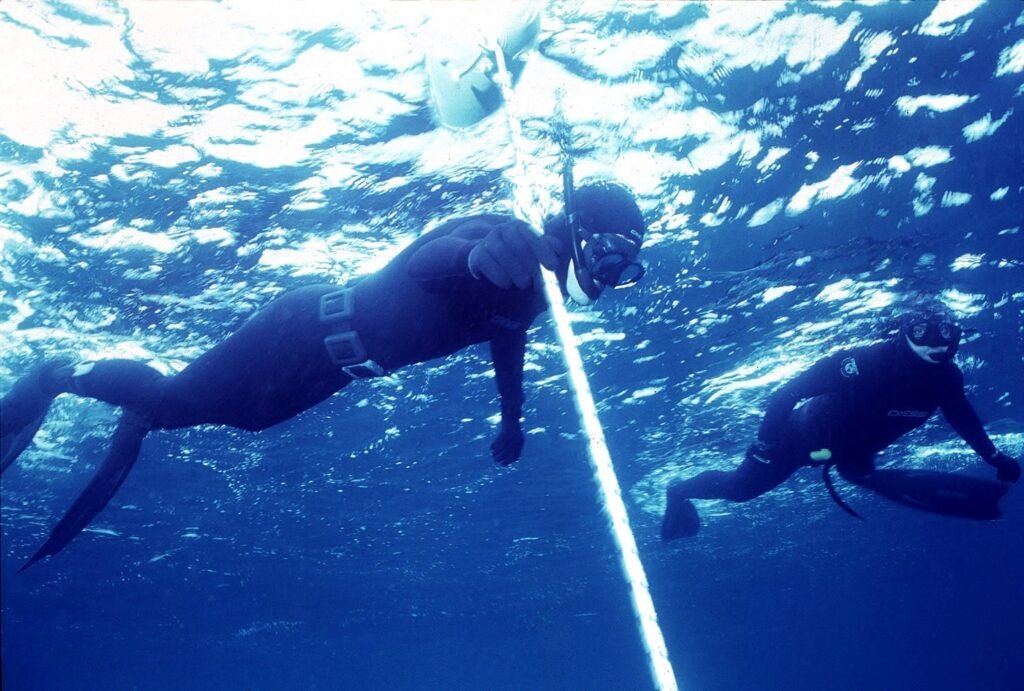
The technique we use in training to get a student to the first 5 meters is to anchor a large training float (so that someone can comfortably stand, with their head out of the water, after diving, on the float and breathe, but also for relaxation before diving) at a depth of 5 meters.
We use a thick anchor rope (not the normal thin rope that floats), so that the diver can grab onto it, wherever he needs to stop, during his dive, due to a problem in equalization (e.g. at 3 or 4 meters, above the 5-meter bottom). We make sure that the rope is taut, from the seabed to the float on the surface.
The new diver relaxes by holding a handle of the float and makes Free Immersion type dives, where the fins are not used (they are worn for safety, but they are not used). The dive is done by holding the rope alternately with the hands, one push down with one hand, one with the other hand, and so on. With this technique, the diver makes a slow diving phase and deals only with his ears: he will gradually perceive the increase in pressure in his ears and already from 1-2 meters deep he will try the first equalization of the pressure in the ears, with the Valsalva method.
The diver may even stop by holding the rope, each time he equalizes. Once he continues, he should no longer feel any pressure in his ears, until he descends 1-2 more meters below, at which point he will stop again, holding the rope, with one hand and with his other hand he will hold and close his nose, to perform the Valsalva maneuver.
The goal is to achieve at least two equalizations at 2 and at 3 or 4 meters, so that the diver can reach the bottom of 5 meters, without any further discomfort in his ears.
When a person faces difficulties, even in the first equalization at 2-2.5 meters deep, we use some additional techniques, that somewhat facilitate the success of an equalization: one trick is for the diver to grab the rope, where he wants to equalize, for example at 2.5 meters, and turn to an upright position by performing the Valsalva maneuver. As we said for scuba divers, with the head in an upright position, equalization is achieved much more easily. So, after equalizing, the diver turns back down and continues another one or two meters, on the rope, for the next equalization. This trick requires very good apnea duration, because it has delays, therefore the novice diver needs to be very well relaxed, before the dive. This is one of the reasons that during a whole day of diving, a group of divers will only manage to do 5 to 10 dives, by each freediver.
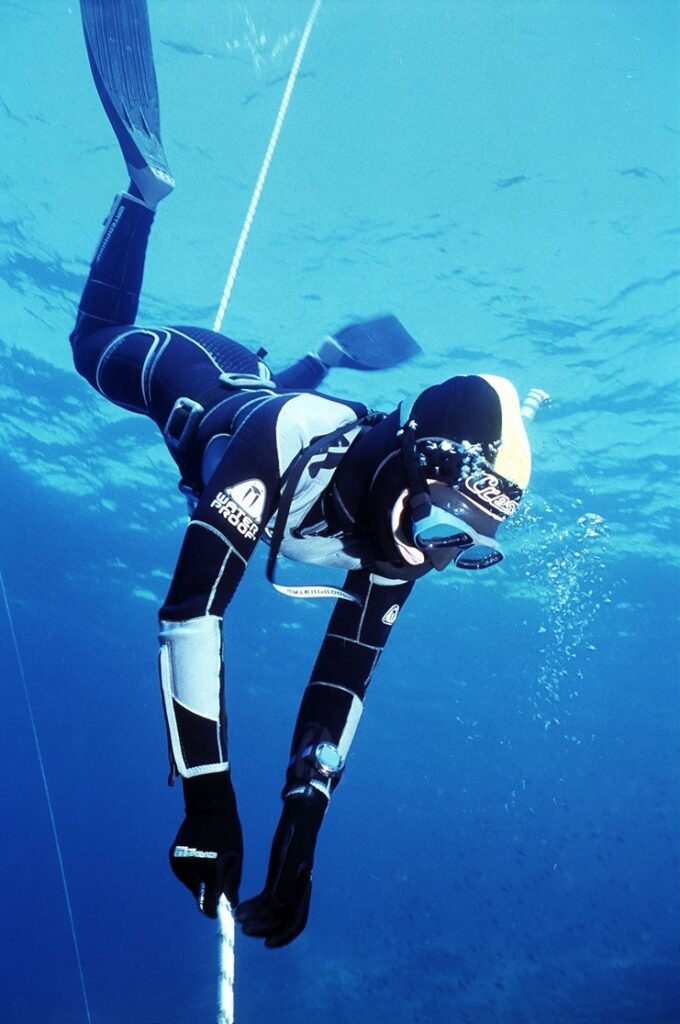
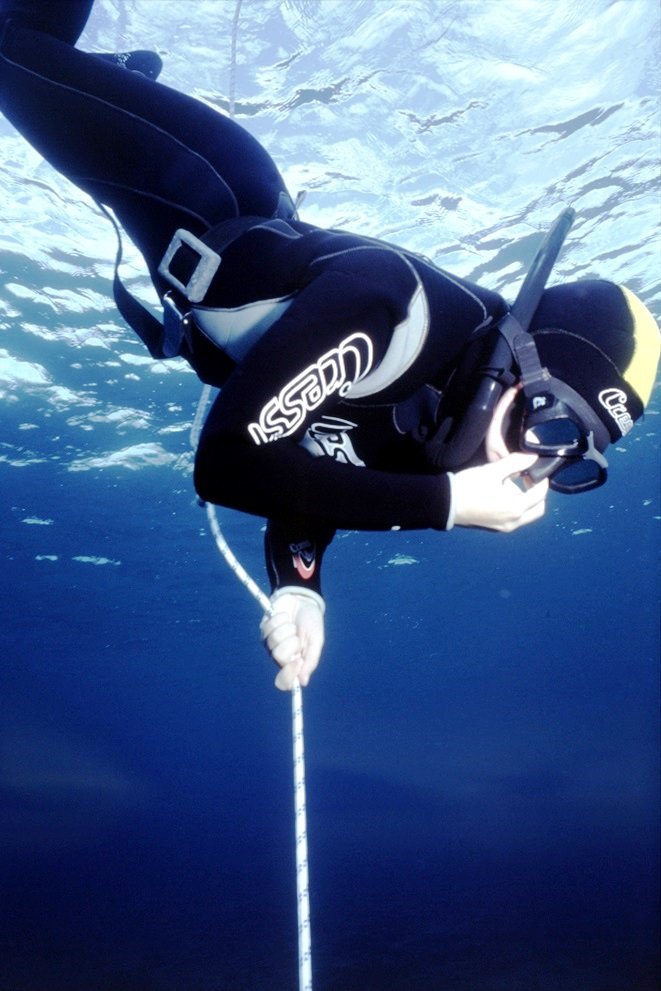
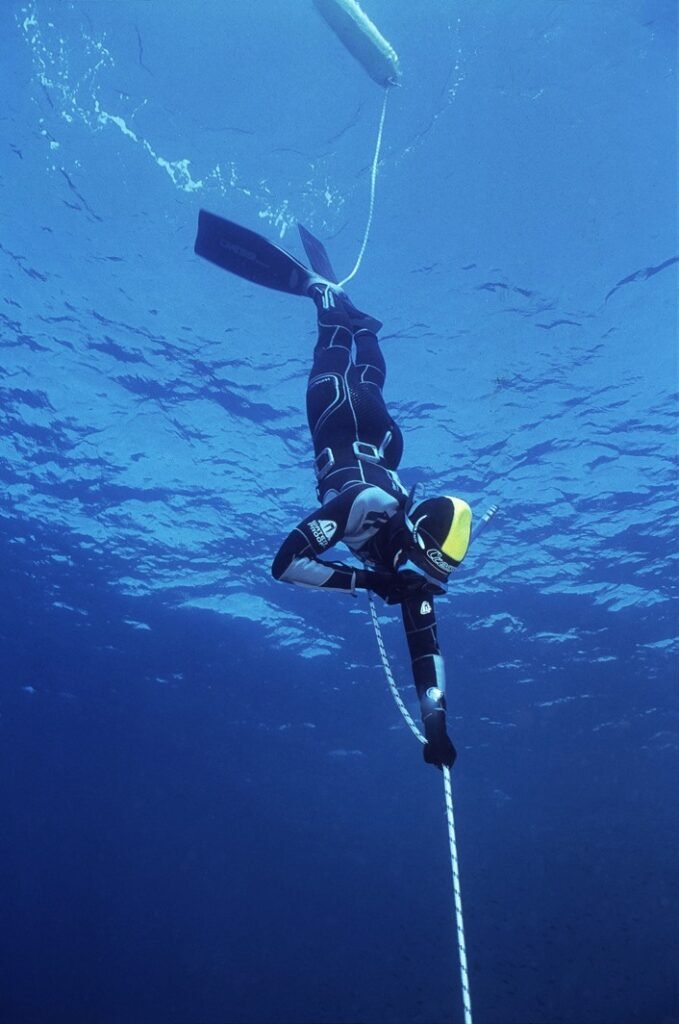
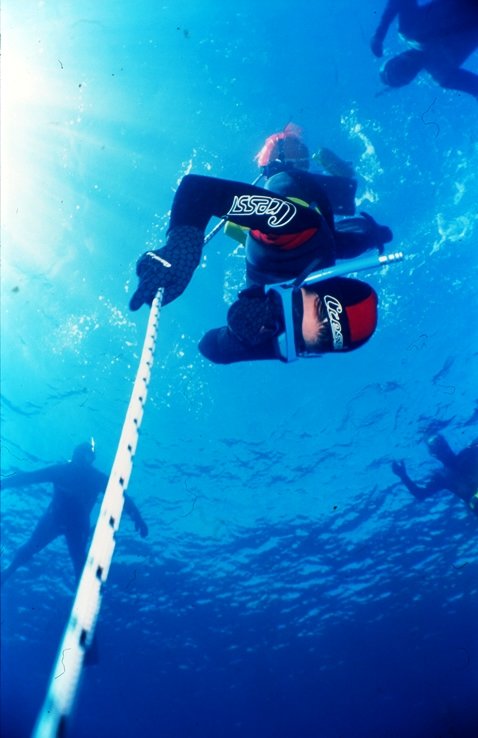
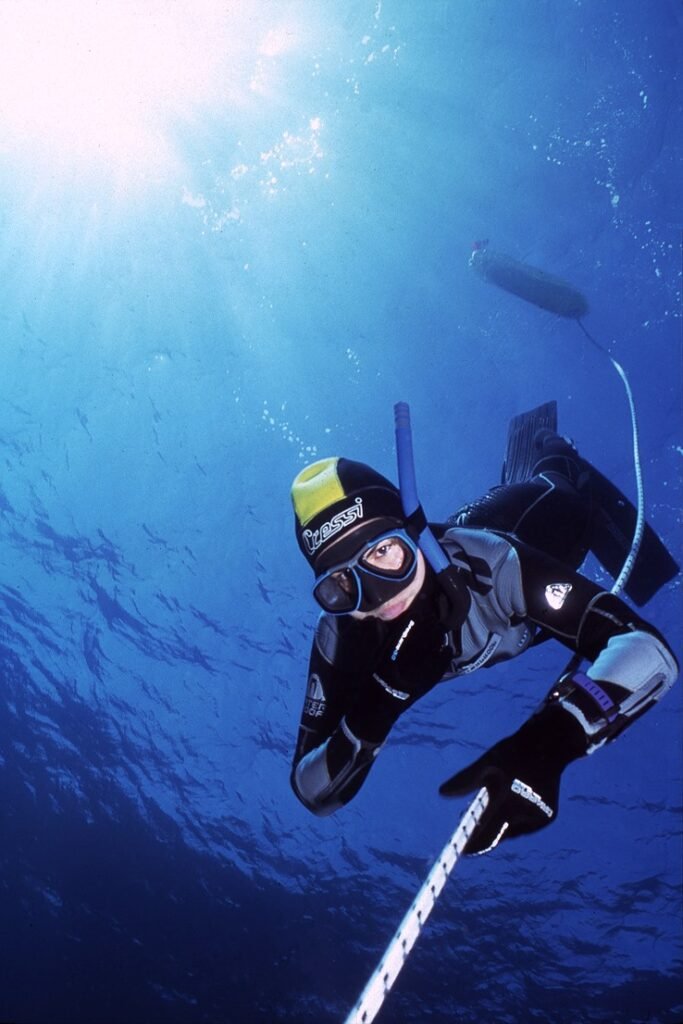
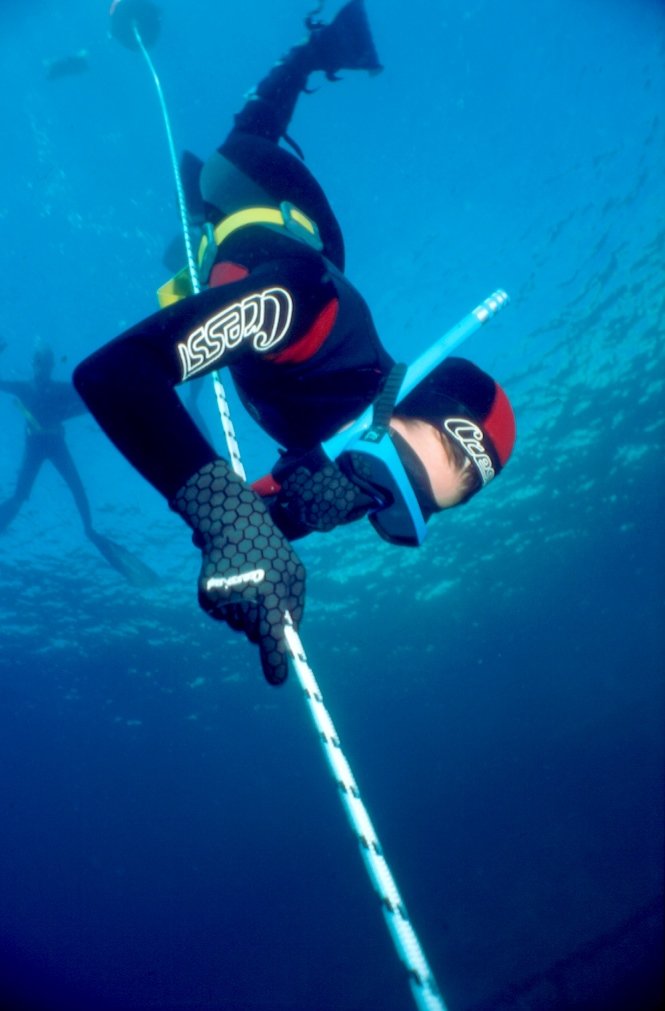
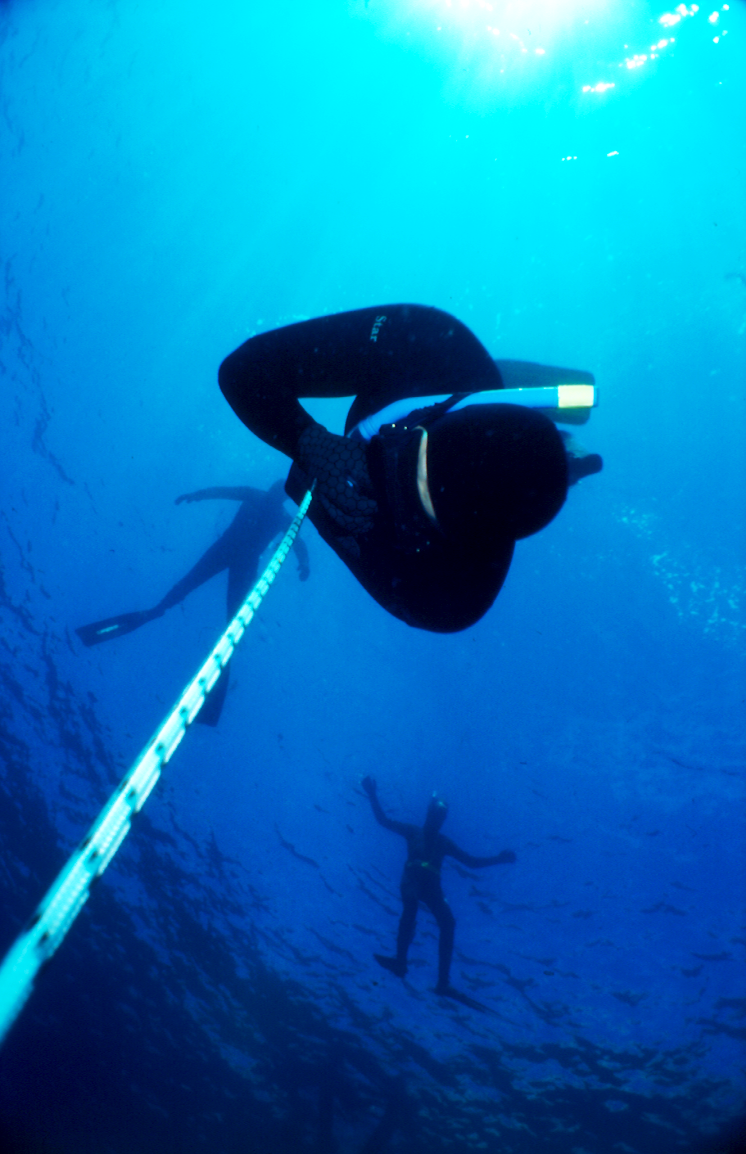
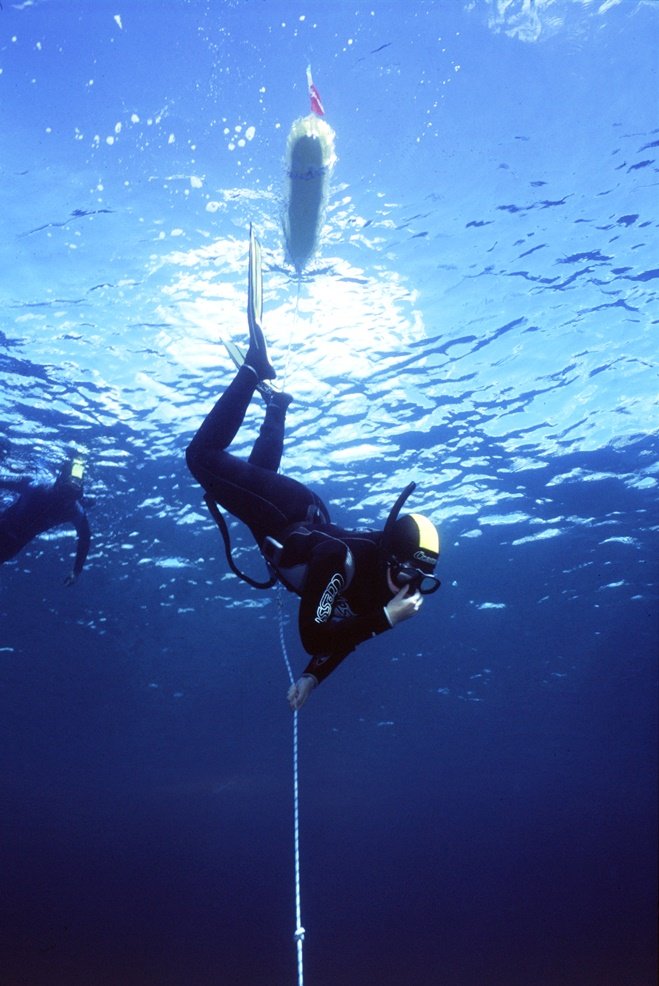
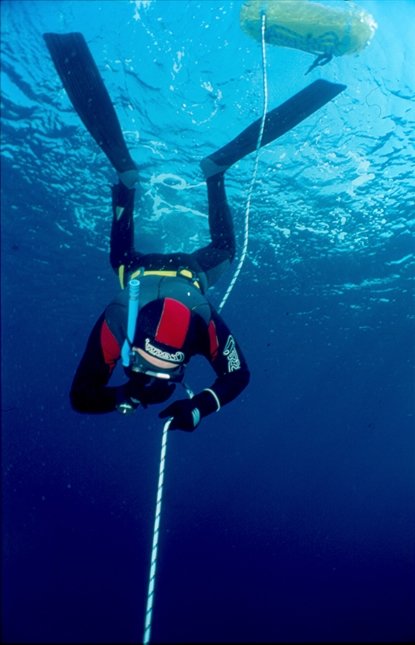
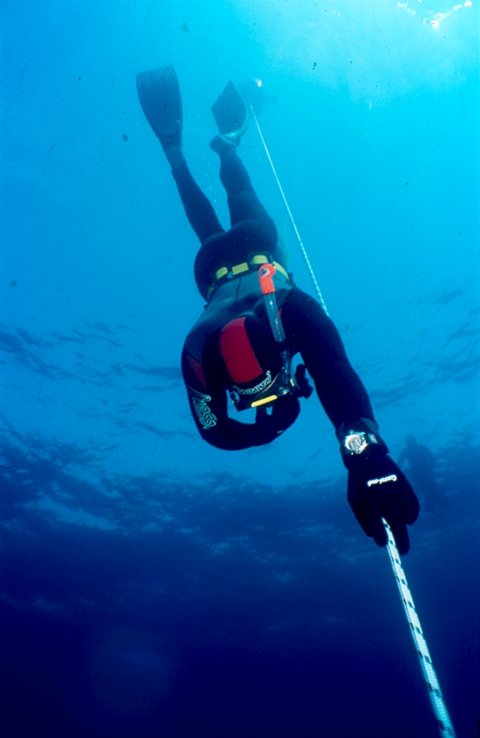
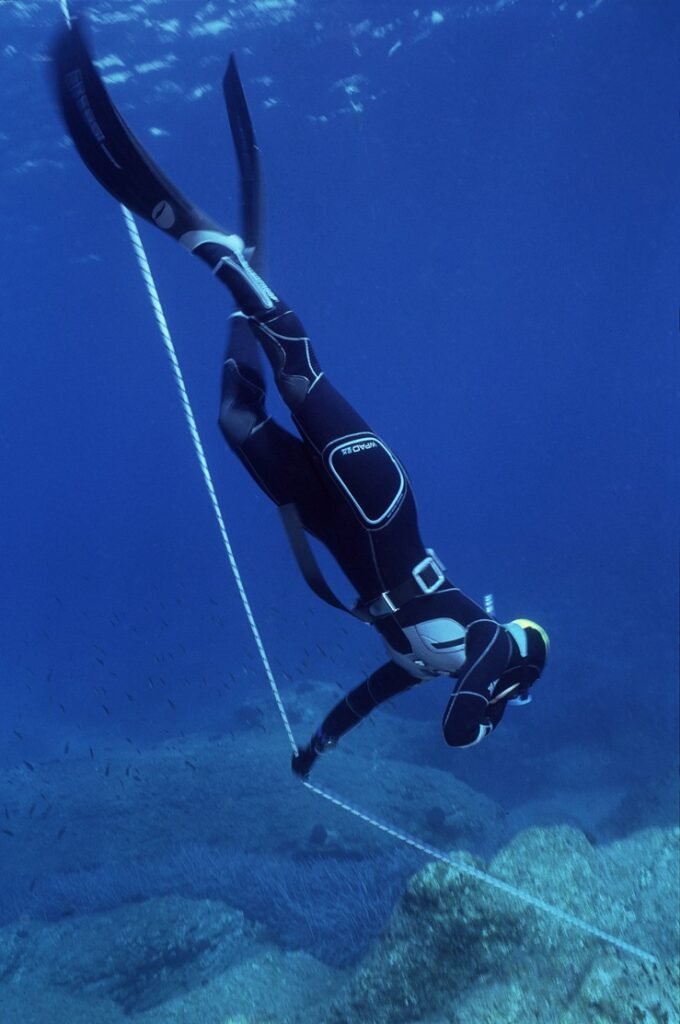
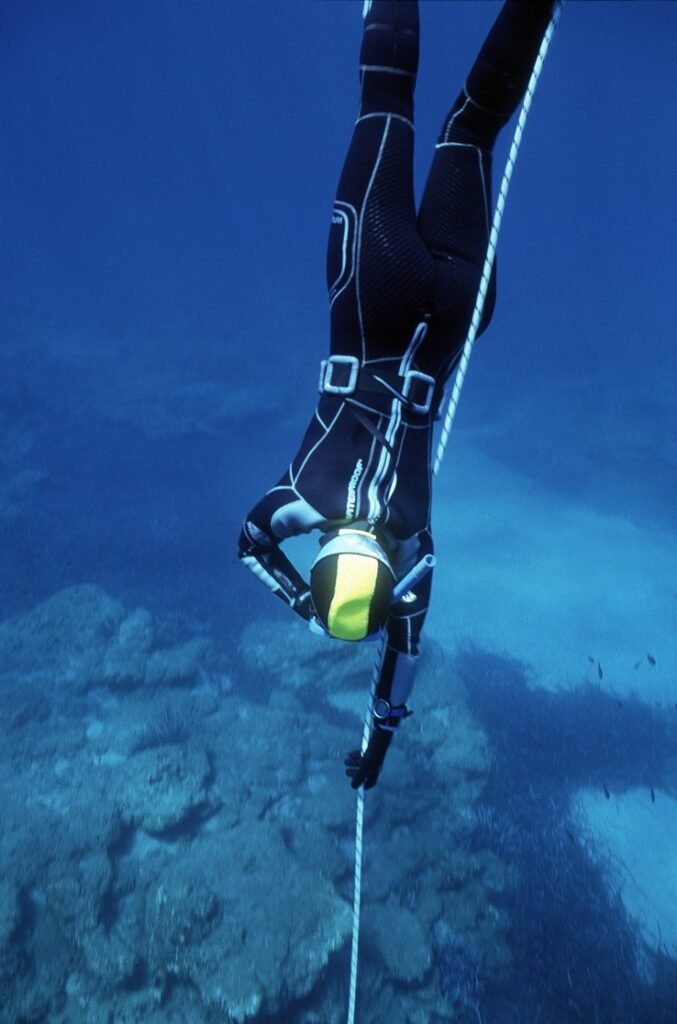
Another, easier technique, is for the diver to grab the rope and stop, wherever a new equalization is needed, but before trying it, to let the positive buoyancy take him one meter higher, that is, retreating on the rope one meter shallower. In other words, if the equalization blockage is at 4 meters, he reaches there and instead of trying equalization, he retreats to 3 meters, where the ears are relieved a little from the pressure. There he will try to do a Valsalva and the trick is that it will be much easier to achieve equalization there (there is less pressure difference in the ears at 3 meters, compared to 4 meters, given that he had equalized last time at 2 meters). So, here, at 3 meters, it is easier to equalize and if he succeeds, he will be able to continue and reach 5 meters, which will be the depth of the next equalization! In other words, the diver tricks the 4 meters where he could not equalize, but also reaches deeper, to 5 meters, without any problem in his ears, from the pressure!
These additional skills are learned with an instructor, but after a training course, it is easy for a novice diver to apply them on his own dives for improving his equalizations. In this case, we explain to the new divers that, since they will not have someone with them, to tie the float to the bottom, they can hang two belts, with several kilos of weights, over the seabed and thus stretch a rope for their float, to hold it in place at the bottom, while diving, without it rising when they dive and pull on the rope.
The value of freediver training is also proven in the issue of equalizations in the first 5 meters.
Even if a new diver does not manage to complete 30 dives in a school, he will continue diving with his friends after the school, using the skills he learned during the course.
A self-taught beginner diver will remain ignorant of what he should do and the reasons he can’t manage to reach 5 meters. He will of course succeed after a long time, because he will have completed countless very shallow dives and eventually his Eustachian tubes will open.
Other self-taught amateurs may become scuba divers and there they will learn to equalize and will complete many dives at some point, so with their Eustachian tubes now trained, they will succeed in diving to 5 meters during their freediving.
Of course, when everyone has the choice to follow a training course in freediving, to learn the skills and achieve everything, with the help of an expert instructor, as easily and as simply as possible, there are no reasons to suffer alone, trying to overcome these first difficulties in freediving!
The first 5 meters of depth are an entering test for every new freediver. A test that can disappoint him and drive him away from freediving or that can put him on the right path, for developing his skills and learning freediving, making the right choices and showing patience and determination, without demanding “here and now”, immediate results from his body.
The 5 meters of the first equalizations in the ears are a great school where you learn for the first time, as a new freediver, that the human body, if you give it the necessary time to adapt, eventually manages to transform into an aquatic, marine, mammal and then it can take you on a journey of much greater secrets in freediving, opening a bright future for your evolution, as a freediver!


Continue the Conversation
Share your thoughts, ask a question or contribute your experience below.