





A Freediving Instructor Trainer and Designer of Training Programs Responding to a Fundamental Question: What Freediving Training Courses are Needed Today and for the Future
As a veteran freediver instructor in the last 26 years and having started 38 years ago in freediver training I certainly feel I have a lot of important advice to offer for the new generations of instructors and designers of freediving training programs. So, this article will be my small contribution to any discussion taking place right now or in the future about how to cover the needs of the people who would like to enter the sport of freediving and/or to develop their skills to greater achievements in freediving.
The most basic question: “Why freediving?”
As a beginning, allow me to address the basic question: “Why freediving and not something else?” What is it that attracts us and ultimately captivates us forever, in this difficult effort to resemble marine mammals, struggling to leave land and make such a strange effort for survival, under the surface of the oceans, with one breath? How can we justify the passion of the freedivers for their strange sport?
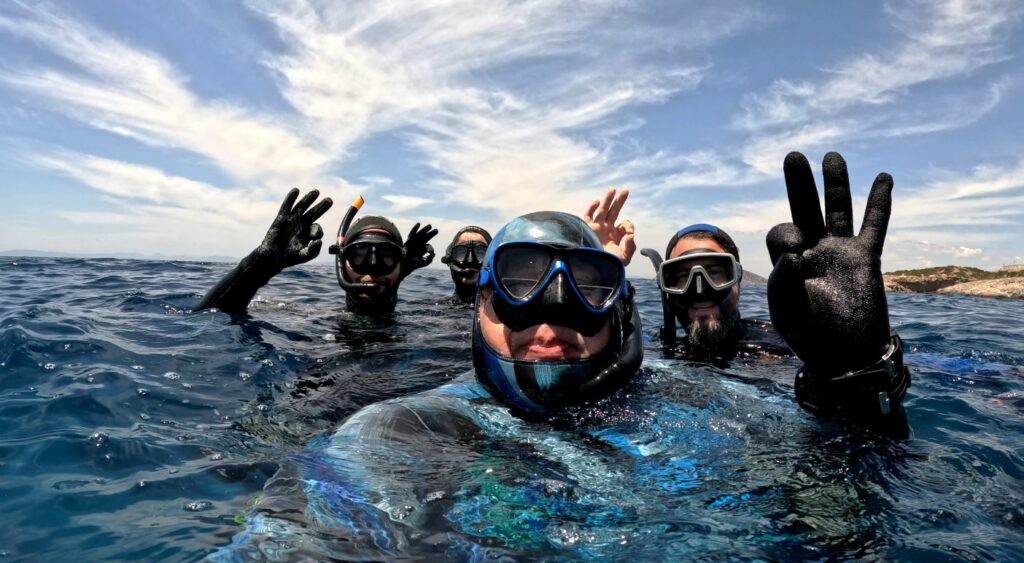
Freediving as a hobby, is an essentially individual sport, by necessity applied to pairs of divers or to groups of people, who will travel together for practical reasons, to reach an underwater destination. A freediver is a lonely spirit, his efforts and achievements at his dives remain his personal secrets and experiences, there are no fans to admire him as an athlete or to celebrate his dives, at least not like as we know it in other sport activities.
Free diving is a deeply personal experience of connection with the nature of the oceans and a journey of personal search and development, in another, unknown world. It is the sport of transforming yourself into an aquatic mammal, meditating without oxygen in the blue, with calmness, faith in your strengths and a dedication to your adaptation to an infinite, still unexplored, oceanic environment, that challenges you to become a member of it.
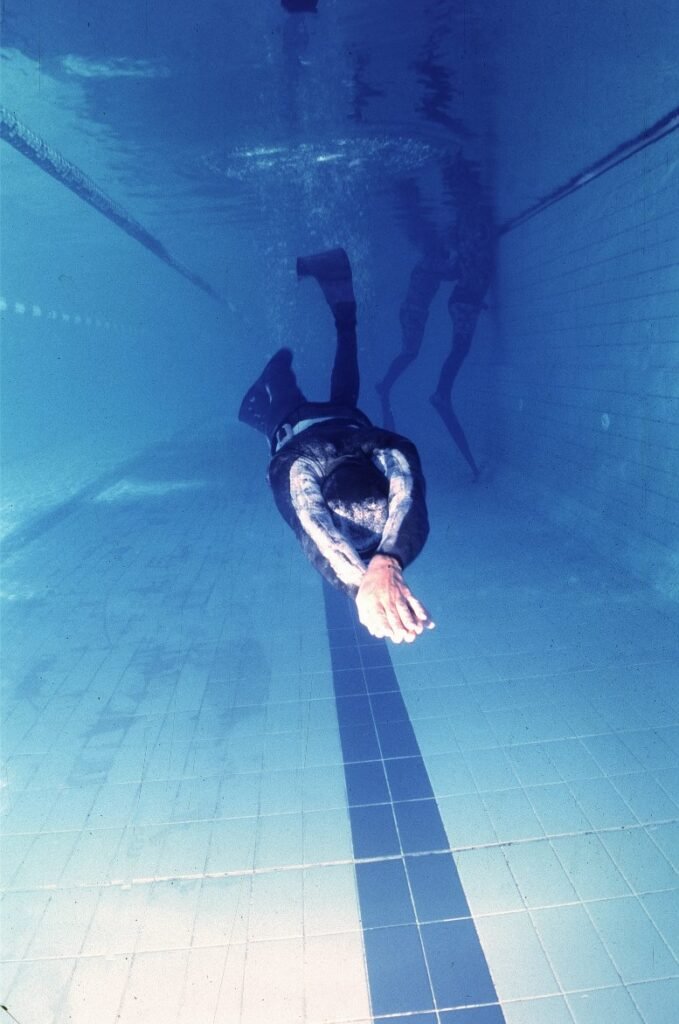
The freediver has chosen (knowingly or not, it does not matter) an activity that will change his life, not only during his dives, but also in general, and will transform him into a more philosophical, calm, decisive and resourceful person. The sea and the aquatic life at the seabed have this effect on us. It is no wonder that the first thing that is lost, when you enter the water and especially when you dive into the blue, is every unnecessary and useless thought of the dry land, every stress and anxiety about unimportant things: our mind is cleansed of every harmful and unnecessary thought and anxiety and what remains is a deep sense of understanding and curiosity, for more knowledge and experience, a calm conquest of a magical experience, which makes time change dimensions and become infinite, satisfying and filled with the meaning of a peaceful coexistence, with every aquatic creature around us.
The bradycardia of diving, the movement in the water and in a space without gravity, embraces the human mind and brings it back to the experience of the nine months of its pre-birth, within the maternal womb, to an absolute calmness and enjoyment of the miracle of life.
Freediving offers the modern man of stressed city life, a unique way to rediscover life and to survive, from the dangerous side effects of our civilization. And to gain a unique relationship with nature and the sea, becoming aware of what this planet really needs, from each of us, so that our children can inherit it, equally beautiful and magical!
The decade of 1990 – 2000: When it all began in freediving training.
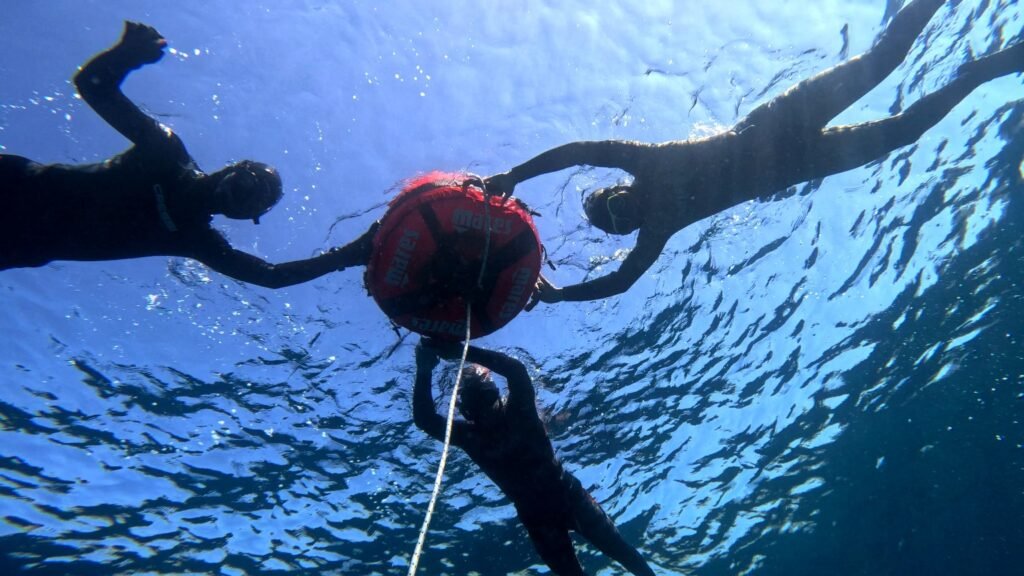
A small group of people who loved the sport of freediving, since they were children and developed into top athletes or wanted to find ways to transfer their rare knowledge and experience to the ordinary people, designed various training programs, over the last 30 years and founded amateur training organizations or integrated these plans into already existing organizations, for training amateur divers.
The development of training and education, is very recent in freediving. For example, my generation grew up and evolved in a freediving environment, completely primitive, in terms of education. Knowledge was the well-hidden secret of the old and experienced freedivers, usually spearfishing enthusiasts, who were also self-taught or discovered techniques and equipment from foreign athletes, originating from countries such as Italy and France, where the first fanatic amateur freedivers evolved, in the modern era, after 1945. It was a time when, at least in Greece, the prevailing mentality said that whatever gave you an advantage in freediving knowledge and skills had to be your absolute secret, in order to develop as a freediver.
My generation was the first to decide to break the old mentality of secrets, by giving everyone the opportunity to learn freediving. One thing that had the most important influence over this decision was our familiarity with the Scuba diving training system in that era.
In a way, we simply decided to copy what was already working perfectly in the amateur scuba diver training system: namely, its entire organization in training levels (the well-known Open water diver, Advanced open water diver, Rescue diver, Divemaster, etc.), the system of certifying organizations and the production of the first instructors in the field.
A similar system with Scuba training, would have certifying Organizations and diving centers, as the schools that would offer freediving training, precisely because these are the modern enterprises to service the amateur freedivers: Dive Centers are certified and controlled by the state and the training Organizations, they offer work to instructors, they are the source of trade for equipment and services such as material rental and of course training, having all the special facilities of a school, but also the connections with travel agencies, transport vehicles, diving boats, swimming pools, etc.
Of course, the project of designing the first training programs in freediving was very difficult and required a huge amount of work. In Scuba diving there was already a 30-year history, since 1960, with a progressive evolution of the Organizations, their instructors and the content of their programs, for the education of amateur divers. In freediving, everything had to be done simultaneously, in order to start the education system as a whole. And so, everything started, in the 1990s and early 2000s.
Since then, we have some new freediving training Organizations like AIDA and Apnea Academy and others older in age, but new to the freediver training, like CMAS, PADI, SSI and others.
Today’s training courses: 25 years of experience and the need for improvements.
The freediving training courses, designed in the early 2000s, remain modern and up-to-date. However, they have already been tested in actual diver training for 25 years and as the first generation of instructors, we have drawn valuable conclusions, about what could be improved, in their content and on ways to adapt them, even better, to the needs of the freediving world.
A necessary clarification here is that we are examining any future changes, only from their educational side and their value for the divers and their instructors. In other words, the question we try to answer is “how can freediving training and the knowledge it offers, become much better?”
There are other aspects that would influence the final decisions of a training Organization, for any change, such as how much any changes will serve diving centers, from a commercial point of view and from an organizing and cost point of view.
But we try to record in this article only the side of the proposals of an instructor and his benefit and the benefit of his prospective students. After all, consumers ultimately impose any changes they need on the market: Markets are, sooner or later, forced to follow the modern needs of the consumers, even when they would not want to, for any reason (market reactions usually occur whenever a change, no matter how positive, increases the cost of providing services).
The levels of freediving training in the future and their content.
A first development would be to correct the issue of training levels. The experience we have gained is that, ideally, we need five (5) training levels. Today the training Organizations have 3 or 4 levels as a number, but not with the content I give to these new 5 levels:
1. The first level of training, that needs to be formalized in freediving today is the level that will teach the completely new, incoming, amateur student diver, how to equalize the pressure in his ears, down to a depth of 5 meters.
Some Organizations today offer a similar level, but in these courses the emphasis is not clearly placed on the subject of equalization, it may simply be taught, without being mandatory. An example is the Basic Freediver PADI, where the instructor may teach freedives to 5 – 6 meters in the pool or the sea, within the content of the course, but it is not a standard subject.
In todays’ courses, the first level usually aims to take the new diver directly to 10 meters deep (like the PADI Freediver). However, we have seen in practice that completely new candidates (who have no experience of their own previous freediving, even at very shallow depths of 3-5 meters) will not manage to exceed 5 meters, in 2 to 3 days of lessons at sea, in terms of ear equalizations.
My own experience as an instructor actually has proved that it takes at least 30 to 40 freedives on the anchored rope to unblock the ears of a new amateur diver and reach 5 meters deep. It has also been proven that after 5 meters, equalization at 7 and 9 meters is very easy to achieve, with only 3-4 dives and there is practically no problem, from then on, if the new diver completes equalization at 5-6 meters, in order to reach 10-12 meters deep. His ears unblock permanently after the first few successful equalizations at 5 meters.
The problem of the first 5 meters in equalizing the ears is huge in the training of new individuals and creates endless problems, for everyone: first of all, for the new divers themselves, who may be disappointed and miss the rest of the content of a current course and lose the 10-meter certification. However, a problem also arises for the instructor, who cannot advance his student and complete the training: everything gets stuck on the 5 meters of the equalization efforts, which fail! And the diving school (the diving center) generally faces a serious problem at this point, because it is forced to bring the student back with a second group, for free, in an effort to offer proper training and completion to its client.
In contrast to completely new divers, those who have engaged even a little, in their own freedives, such as amateur spearfishing, or as scuba divers, or even as swimming athletes, have already completed (without knowing it or having counted it) 30 to 40 successful equalizations down to 4-5 meters. Thus, groups of these amateurs will indeed manage to equalize easily, during a course that will take them directly to 10 meters for certification. However, if there are also new divers with them in the same group, who do not equalize, things get complicated and the whole group is in danger to fail the rest of the course due to the delays.
Even if an organization does not want to create a new pre-level at 5 meters depth, it could at least set a criterion, of successful ear equalization, down to 5 meters, before someone can start at the 10-meter course.
For example, the way I personally handle the problem within the PADI system, as it is formed today and the solution to the problem, that I recommend, in my instructor developing schools, to all my new instructors, is the following:
We suggest to our new candidate students, if they have no previous experience of their own shallow dives or scuba etc., that they first come to the Basic Freediver PADI course. There, despite the fact that we still do not have time to take them all the way down to 5 meters, because they may not be able to reach their equalizations to 5 meters depth in the 1-2 days of school, we have the enormous benefit that we will teach them the method and they will learn a safe way to do the equalizations. So, not only do they complete the Basic Freediver PADI, which does not have mandatory 5 meters dives anyway, but we suggest that they continue diving with their own dive buddies, to try equalizations deeper and when they reach 5 meters comfortably, to come for the next level (the Freediver PADI).
It is the same thing that we propose to all our certified students in all levels: after completing a training level we urge all our students to continue to dive and to try some deeper dives. If they reach a point where it becomes difficult to continue deeper, they can come to develop their skills at the next level. This is the way that all the levels are designed, for the amateur freediver. For example, a diver completes the 10 m level and continues to dive, with his own dive buddies and makes some deeper dives to 12, 14 and 16 meters. But when he feels that he has difficulties, to achieve any greater depths, it is time to follow the next course, that will take him to 20 meters and more. Usually, we do not recommend to a diver to come immediately to the next level for example from 10 to 20 meters, without trying some dives first on his own, deeper than 10 meters, based on what he has already learned. The same rule applies between any two levels, for example going from the 20 m to the 30 m course.
So, it is a very logical solution for a new diver to complete the first entry level (like Basic Freediver PADI) and to try some deeper dives to 5 m, before entering the next level, the 10 m course.
The conclusion is that we need a new first level, with an emphasis on equalizations to 5 meters depth and at least 4 days of practice in the pool or the sea. The 4 days of diving are a basic requirement for 30-40 dives in total, by each person (for example 10 dives, per training day, by each person) given that there are up to 4 people per instructor, in the group.
This introductory level can have some basic knowledge in theory (technique, physiology, equipment, rescue, organization, safety measures, environment, etc.).
It can also contain basic training in static apnea (1 minute of static) and dynamic apnea (15-20 meters of dynamic).
The entry level can easily be done only in a pool, as long as there is a depth of 5 meters, available at some point in the pool.
The alternative for those Organizations that do not consider this “pre-infant level” necessary, would be a pre-check by the instructor that the prospective diver can comfortably equalize his ears down to 5 meters depth, as a prerequisite for the 10 m course (today there are no conditions for a student diver to enter a 10 m certifying course, like Freediver PADI).
2. The second level of training is most popular course today for the diving schools: the level that certifies a freediver for 10 meters dives.
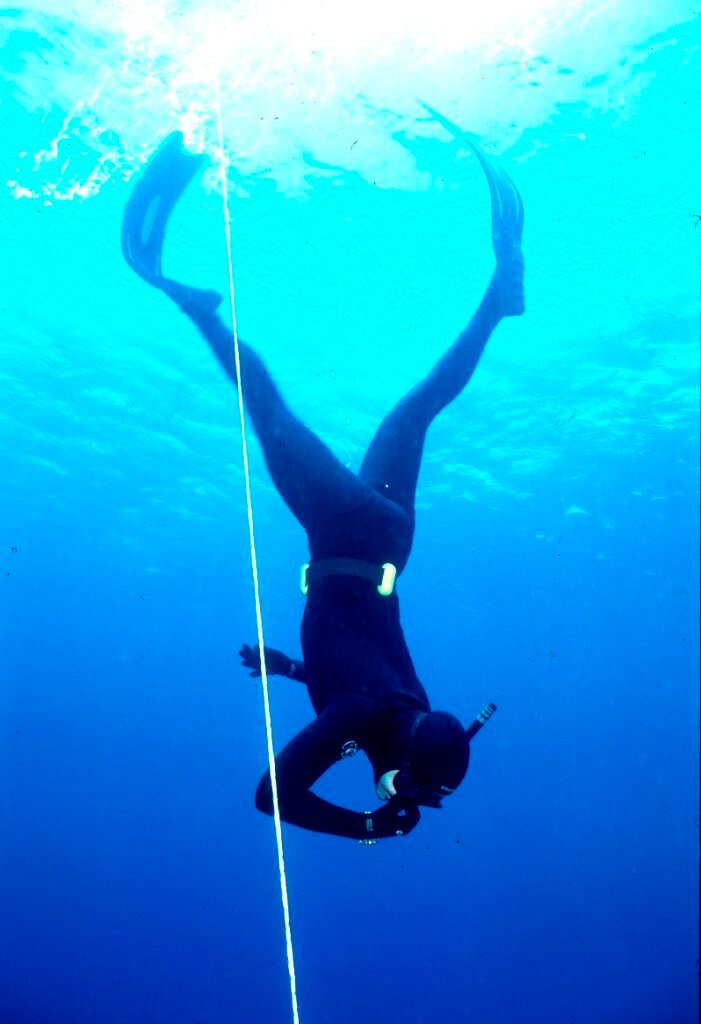
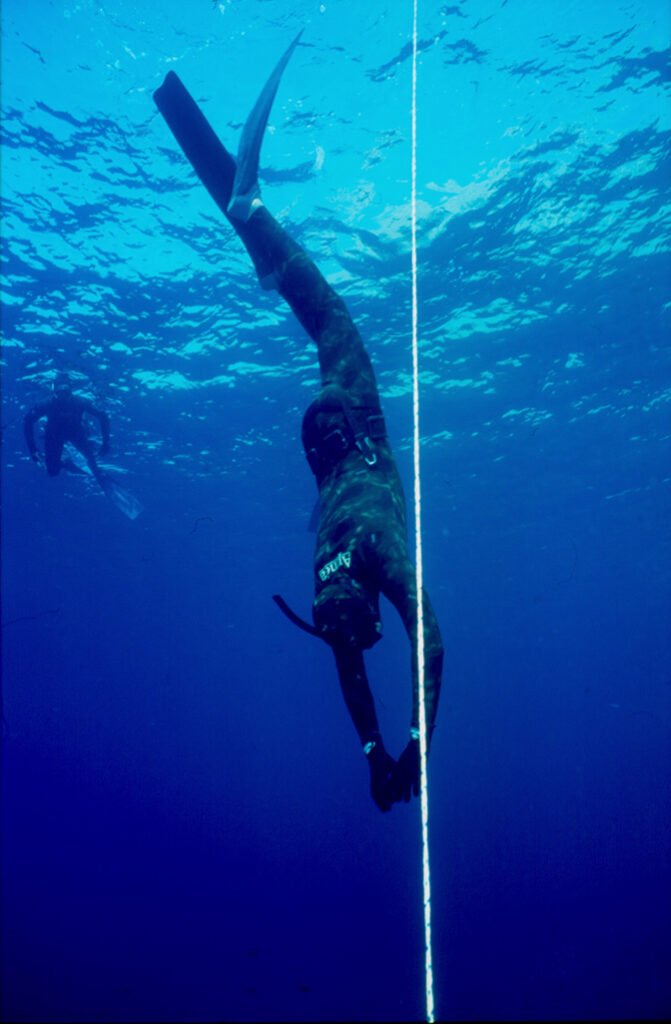
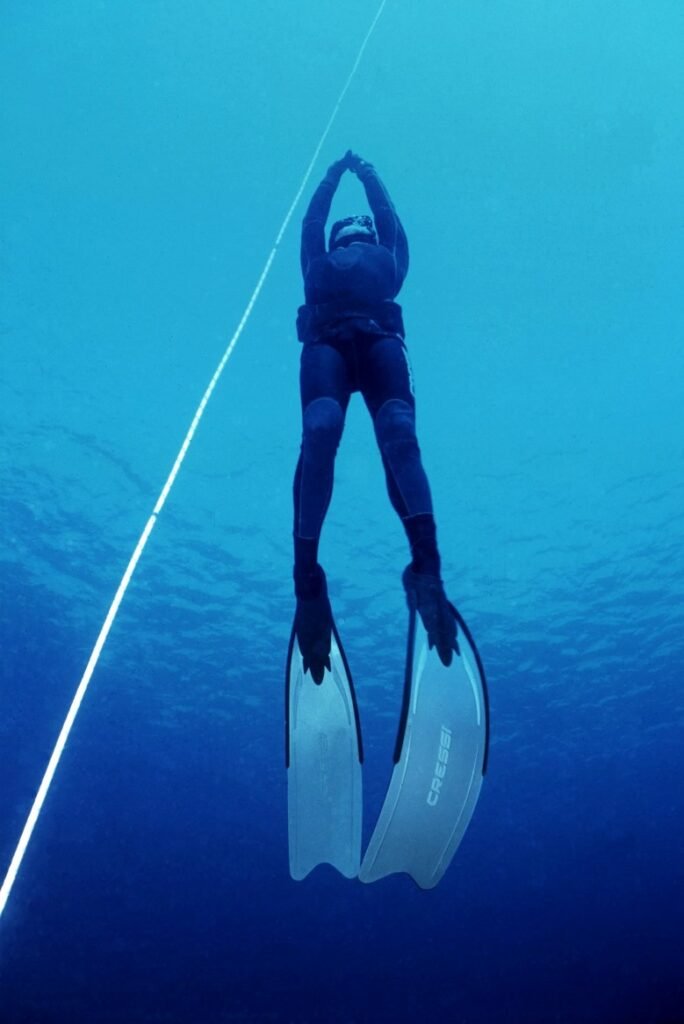
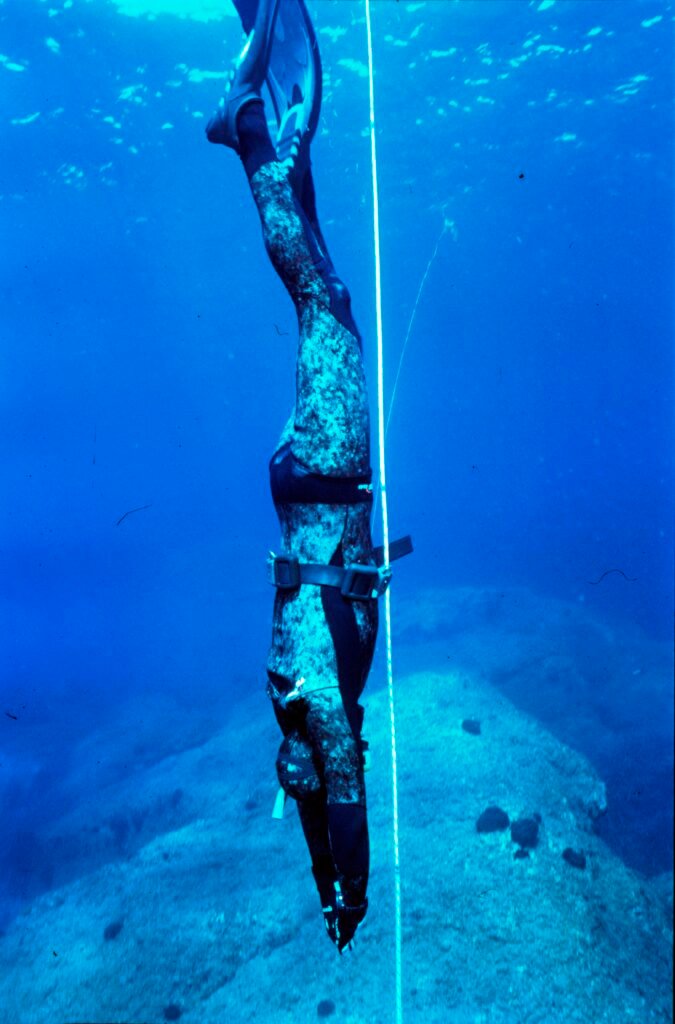
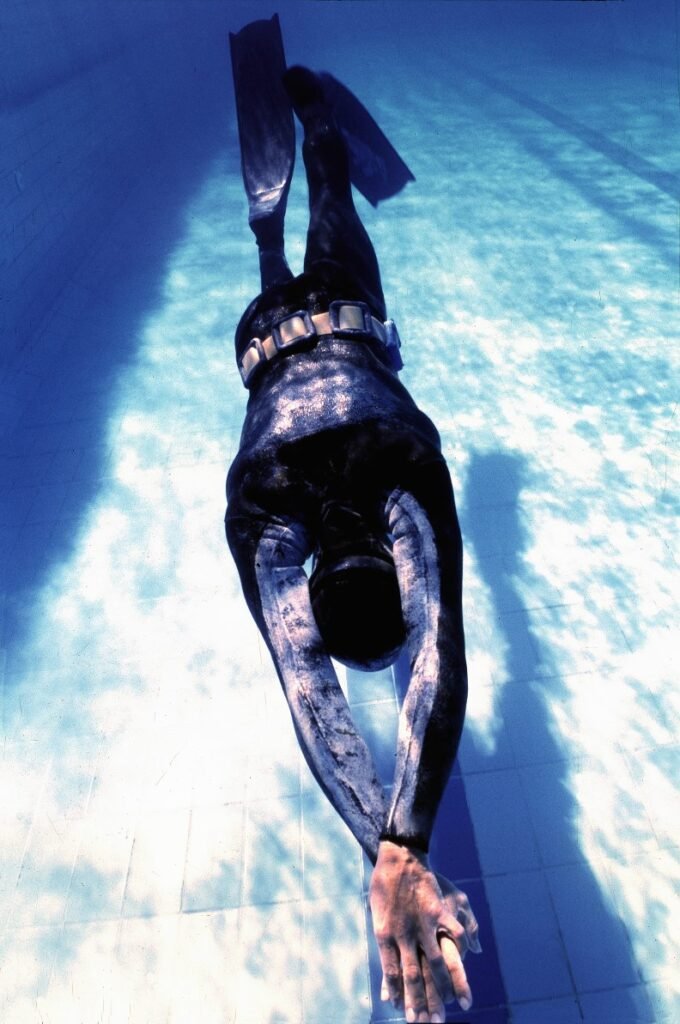
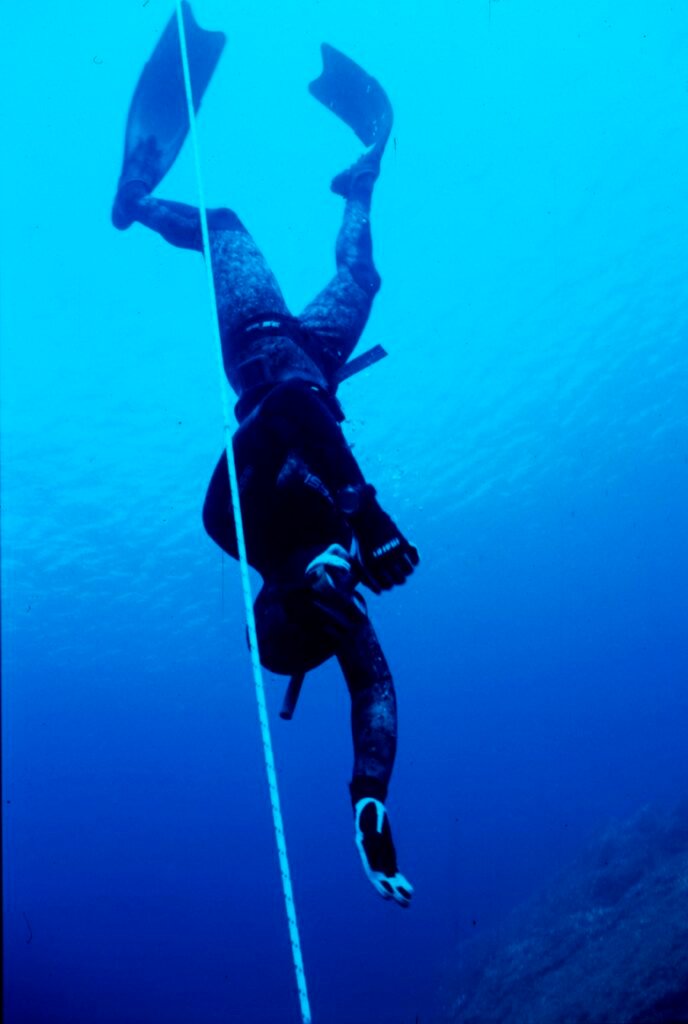
In this course there is a first complete analysis of the entire theory of freediving. In the development of skills, the only thing missing from this level is the need for a longer duration, of the course.
It has been proven that 3 days of practice in the pool and the sea (one day in the pool and two days in the open water) is a very short duration. Especially diving in the sea requires at least 3 days, instead of two. Organizations overcome this by setting the minimum duration of the course, but experience shows that the minimum duration in the sea must also be increased to 3 days, which is already being implemented by instructors, in order to correctly complete all the content of the course and for their students to manage to reach 10 meters deep in their dives, progressively and without any pressure.
Even in the pool is almost impossible to complete all the skills needed in one training day, because not only do the candidates have to learn static and dynamic apnea for the first time, but they also have to achieve some high performances, that do not come out immediately and require several apneas from each student-diver.
Today, the most experienced instructors, if they do not put in a second day in the pool to make the school less stressful, in terms of time pressure, they will use some part from the sea training days, for example doing the dynamics on the sea coastline (after the first pool day) and then making the constant weight dives of the day.
For this reason, it would be extremely helpful for everyone to have done a mandatory entry level, where they will have already learned how to do static and dynamic apneas (the entire technique and training process, that is). In this way, in one pool day the student-divers will simply have to increase their performances with comfort, to what the level provides (e.g. 1.5 minutes of static and 25m of dynamic).
3. The third level of training, which is the introduction to deep freediving (18 to 20 meters deep) and is also one of the most sought-after courses by amateur freedivers.
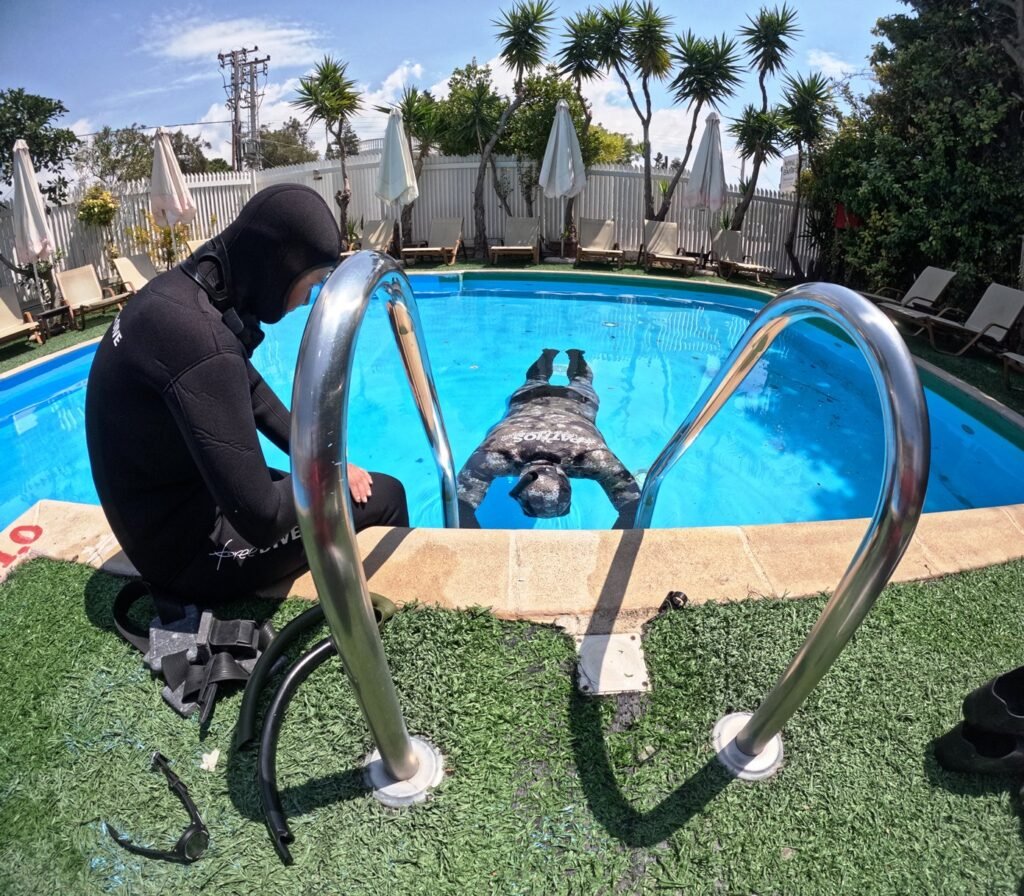
The most experienced amateur freedivers will soon seek advanced knowledge and development of their skills for deeper dives to a depth of 20 meters. Here the courses are also complete, including a very satisfactory level of knowledge and techniques (skills) of deep freediving.
The only lack in practice is again the very short minimum duration of the open water dives (one day in the pool, two days of training in the sea). Personally, I would put 2 days in the pool and 3 days in the sea, to make the level complete and in practice I have never done less than 3 days of open water lessons in the sea. The content of the static performances of 2.5 minutes and 50 meters of dynamic, requires at least one day in the pool. But the sea also requires at least 3 days, of progressively increasing the diving depths, to reach from 14 m the 20 meters goal in depth. For these courses we take as a standard that a course can include as many as 4 student-divers in the group with one instructor.
4. The fourth level of training, which will cover very deep free diving (25 to 28 meters). Here I intentionally set the limit at 25 to 28 meters and not at 30 meters deep.
The reason is that this course is becoming less popular as the training Organizations increase the depths to 30 meters and below (32 or even 40 meters) trying to satisfy some almost professional athletes who train every day and look for a course available to take them for deep training dives.
The reason the course today loses the greater public, is that the program must meet the needs of the simple amateur, who wants to improve his knowledge and deep diving skills, as a very experienced diver, but at the same time he is not a professional athlete to dedicate 3-4 days, a week, to training, which is what a dive from 30 meters and below requires. In other words, the excessive increase in depth, in my opinion, drives away very experienced, but not athletic freedivers, who would like to pass this school and can reach 25 to 28 meters, but not deeper, because they do not have the time to exercise all week and be in such exceptional athletic shape to reach 30 to 40 meters depths.
The problem for the Organizations will be solved by letting this level to a 25-28 meter depth and adding another, extremely valuable, level of training for athletic deep freediving, as I propose!
5. The fifth level of training, designed to meet the needs of athletic deep freediving (at depths of 32 to 40 meters) and championship training.
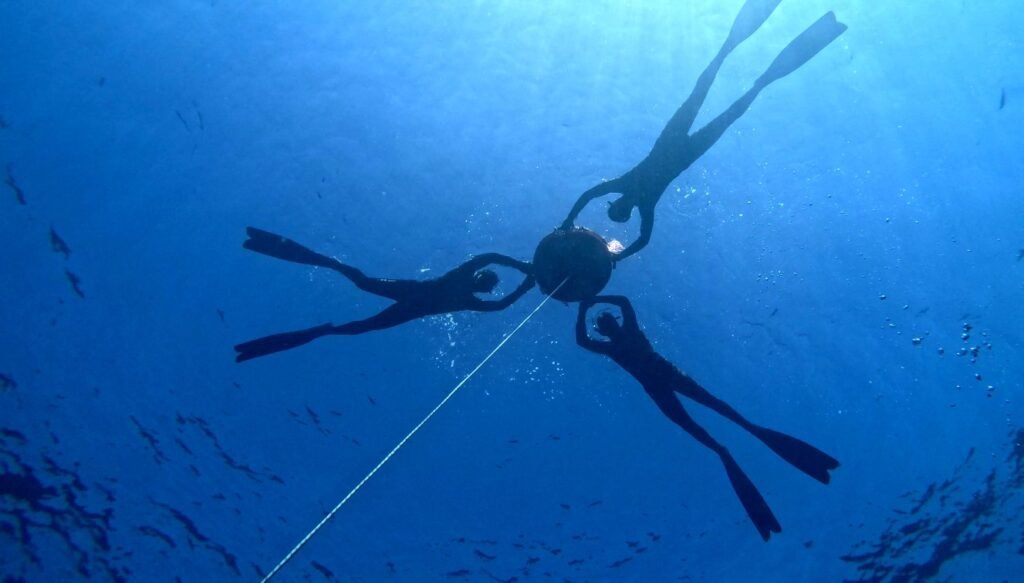
The fanatical hobbyists of deep freediving who have completed the fourth level (very deep freediving) will be able to train as candidate athletes, in a course that will teach them not so much more knowledge about deep freediving (the theory has been exhausted in the previous level), but will coach them on how to apply their own training plans to increase performance in the pool or at sea depth.
It is the level that is currently completely missing from the training of amateur freedivers and will certainly prove very popular in the future, as there are now quite a few enthusiasts of championship freediving, who are looking for training plans to achieve great performances in the pool or in deep diving.
We could say that this course will be something similar to the Technical Diving (Tec Rec) of scuba divers. If an amateur scuba diver wants to continue deeper than the 40 meters, which is the limit for deep scuba diving with air and nitrox, then he enters the Technical Diving courses with Trimix (mixtures of helium-nitrogen-oxygen) and with the use of Rebreathers (Closed Circuit Devices).
Corresponding levels could therefore be designed in freediving for athletic deep freediving, starting with this 5th course of athletic deep freediving to 32-40 meters!
Freediving championship specialties courses in the future.
The possibility of later expanding this cycle to all categories of current freediving records is simple and very likely to happen in the future and we will possibly see training specialties in all types of championship-record freediving, such as: Deep Free Immersion, Deep Constant Weights Monofin, Deep Constant Weights Bifins, Deep Constant Weights No fins, even the No limits System in freediving.
Many freediving athletes would love to have the opportunity to try these disciplines in a training course offered by a Dive Center, with a certification by a training organization and to make their personal freediving achievements, even if they won’t reach any champion level record, just for the experience of very deep freediving, beyond the constant weight system.
Freediving education is in for a great future! The fact alone that freediver training has come of age and will no longer suffer from adolescent syndromes, such as the complex about ever greater depths, will soon show that freediving has now matured and can provide many new levels, programs and specialties in its evolution from now on.
We can anticipate to see the now mature freediving training organizations adopting the suggestions of their experienced instructors and presenting, soon, many new courses and specialties, of great interest to the freediving public!

Continue the Conversation
Share your thoughts, ask a question or contribute your experience below.